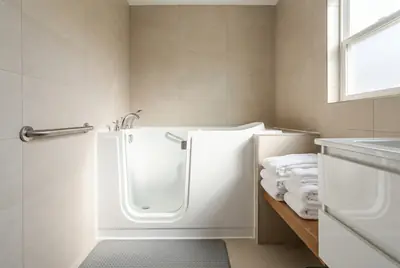
Walk-In Tub Installation

Walk-In Tub Installation in West Line, Missouri (MO)

The West Line crew we send takes the old bathtub out, seals the new door in and tests it full, all over Cass County. Bathing stays at home, where it belongs.

One number reaches the people who fit the tubs. Say what the bathroom is like and we take it from there.

(844) 578-1861
  • The crew that covers your area takes the call
  • A home assessment and a written quote, both set up on the call
  • Nothing is decided until you decide it

Take your time on the phone. Who does the bathing, how they get around today, the size of the bathroom and the doorways on the way in: that is all we need to set a date for the visit.

Population
107
County
Cass County
State
Missouri
Region
Midwest
Household income
$53,929

Why You Might Need Better Bathroom Safety in West Line, Missouri

Living out here in Cass County has many charms, but older houses often feature outdated bathrooms that make daily hygiene quite risky. Fortunately, upgrading your soaking setup lets you bathe without any fear of slipping on wet ceramic tiles.

Perhaps you struggle with stiff joints or limited mobility after working hard in your yard all day long. This smart plumbing upgrade gives you total peace of mind every single morning.

Understanding the Mechanics of a Side-Door Soak Machine

Most traditional bath fixtures force you to lift your legs dangerously high just to get inside the basin. Instead of risking a nasty fall, these modern units feature a watertight swinging gate that opens right up.

Naturally, you just walk right through the low threshold and sit down on the built-in seat before filling the basin with warm water. Such thoughtful design protects your hips and knees from sudden strain.

Traditional Tub Modern Side-Door Basin
High step-over wall Ultra-low entry threshold
Standing shower risk Built-in contoured seat
Slippery bottom surface Textured slip-resistant floor

Exploring the Installation Process From Start to Finish

First of all, local contractors remove your old porcelain shell and inspect the surrounding wooden subfloor for any hidden moisture damage. Following that crucial step, they carefully measure the alcove to ensure a snug and secure fit for the new acrylic unit.

Furthermore, experienced plumbers update your supply lines and drainage pipes to handle the faster water evacuation rates required by these deep soaking basins. Which means you spend less time waiting around for the water to drain out after your relaxing bath.

Eventually, the crew secures the heavy-duty shell to the wall studs and seals all the seams with waterproof silicone caulk. Consequently, you never have to worry about leaks damaging the flooring underneath your brand new apparatus.

Financial Realities and Budgeting for Your Home Project

Now, tackling a bathroom renovation requires looking closely at your finances to see what makes the most sense for your household. Given that the local median household income sits around fifty-three thousand dollars, planning ahead helps you manage expenses without any stress.

Thankfully, many homeowners find that investing in bathroom accessibility increases overall property value while drastically improving daily living standards. On top of that, requesting a zero-cost estimate lets you compare local pricing options before signing any paperwork.

Meanwhile, beware of contractors who demand huge cash deposits upfront before ordering materials or showing up on your property. Instead, reputable local tradespeople outline every single expense clearly so you know exactly what you are paying for.

Navigating Specific Neighborhood Demographics and Logistics

Operating inside a small community with just over one hundred residents means contractors must travel efficiently to reach rural properties across the region. Because zip codes here span quiet countryside roads, local professionals bring all necessary tools in their trucks to avoid forgotten parts.

Besides that, older farmhouses and rural properties sometimes feature quirky plumbing configurations that require custom adaptation work during the plumbing swap. Fortunately, skilled local technicians know how to handle rusted iron pipes and uneven walls without losing their cool.

Equally important, scheduling your project during the milder spring or autumn months ensures that your plumbing stays functional when weather conditions remain pleasant. This careful timing prevents your household from dealing with extreme temperature fluctuations while the water is shut off.

Comparing Safety Features to Find Your Ideal Match

Different models come with various perks like heated backrests, hydrotherapy jets, and quick-drain technology to make your soaking experience truly luxurious. Selecting the right combination of features lets you customize your daily hygiene routine according to your personal preferences.

Instead of guessing which model fits your space, you can ask a qualified professional to evaluate your bathroom dimensions during a site visit. That way, you avoid buying a bulky unit that blocks your sink or toilet access.

Additionally, rapid-fill faucets save you from sitting in a chilling empty basin while waiting for the hot water to rise around your legs. Ultimately, every small mechanical detail contributes heavily to your overall satisfaction and daily relaxation.

Preparing Your Home Before the Work Crews Arrive

Before any heavy lifting begins, clearing a wide path from your front door to the bathroom protects your hallways and furniture from accidental bumps. Following this simple precaution speeds up the entire remodeling timeline considerably.

In addition, removing all personal items like towels, rugs, and decorative bottles ensures that the technicians have plenty of workspace to move around safely. This proactive step keeps your belongings clean and out of the way of dusty construction debris.

Furthermore, keeping pets locked safely in a back bedroom prevents them from escaping while doors remain propped open for tools and supplies. Such basic preparations make the whole experience much smoother for everyone involved.

Evaluating Long-Term Maintenance and Daily Upkeep Requirements

Maintaining your new accessible soaking vessel requires using non-abrasive cleaners that protect the high-gloss acrylic finish from unsightly scratches and dull spots. By wiping down the interior walls regularly, you prevent soap scum buildup and hard water stains from forming.

Equally crucial, checking the mechanical door seal periodically ensures that the rubber gasket remains flexible and watertight over many years of continuous use. Should you notice any minor wear and tear, calling a technician immediately prevents minor issues from turning into major headaches.

Despite requiring a bit of routine cleaning, these specialized basins demand far less upkeep than old cast iron tubs that chip and rust over time. Consequently, you enjoy a pristine bathing environment with minimal physical effort on your part.

How to Take the Next Step Toward Greater Independence

Deciding to upgrade your bathroom is a major milestone that brings incredible restfulness and security to your golden years in this charming Missouri municipality. Instead of waiting for a minor slip to force your hand, you can take control of your home safety right now.

Simply reach out today to request your complimentary, no-obligation project estimate from a trusted local service provider who understands the unique needs of our region. This zero-pressure consultation gives you clear answers about pricing, timelines, and installation logistics without any hidden surprises.

Take charge of your household comfort and safeguard your personal independence by scheduling your consultation today. Your future self will certainly thank you for making such a wise and practical home improvement choice.

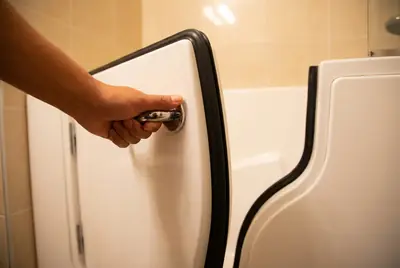
The door, the seal, the drain: how a walk-in tub works in West Line

Three ideas carry the whole invention. Once they make sense, the rest of this page is just detail.

The inward opening door of a walk-in tub

A door that opens inward

You open the door, walk in on a dry floor, sit down and close it. Only then does the water run. Because the door swings into the tub, the water itself presses it against its seal: the fuller the tub, the tighter it holds. The design cannot forget to be shut properly.

A threshold about four inches high

An ordinary bathtub asks you to swing a leg over a wall some fifteen inches tall, on wet tile, usually while holding nothing sturdier than a towel bar. A walk-in tub asks for a small step, about the height of a stair riser cut in half, with a grab bar placed exactly where your hand goes looking for one.

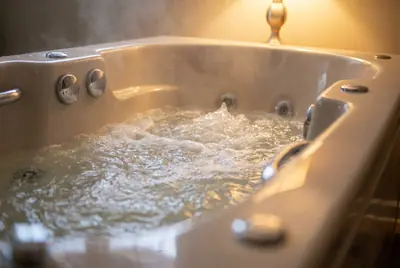
Hydrotherapy jets working inside a filled walk-in tub

A drain built to hurry

The honest cost of the sealed door is that you sit while the tub fills and while it empties. Makers answer with fast drains, often two of them, that send the water away in a couple of minutes, and with heated seats and warm air so those minutes pass kindly. We time both on your own plumbing at the assessment.

Tub or walk-in shower? A fair answer

We install walk-in tubs, so you might expect us to always recommend one. We will not. If you have not enjoyed a bath in twenty years, a walk-in shower may serve you better, and we will say so at your own sink. Here is the honest picture.

The questionWalk-in tubWalk-in shower
What bathing feels likeA full warm soak, jets if you want themA quick rinse, standing or on a bench
Time it asks of youLonger: fill, soak, drainMinutes, in and out
Floor space neededSits in the footprint of the old bathtubWants a little more open floor to work well
Budget, installedHigher, because the door and seal are precision workOften lower for a simple conversion
Sore joints and tired musclesWarm water and jets do real, daily good hereNo soak, so none of the soak's relief
Who tends to love itPeople who cherish their bath and mean to keep itPeople who shower quickly and want easy cleaning

The deciding question is usually the first row. If the answer to "do you miss your bath" is yes, the rest of the table tends to follow.

Six pieces of work, one quiet bathroom in West Line

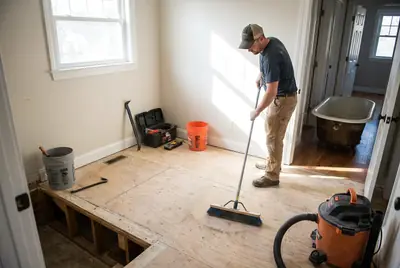
  • The old tub leaves first

    We cut it free, shield the floors along the hallway and carry it out gently. Most old bathtubs are gone from the house before lunch.

    The old tub leaves first
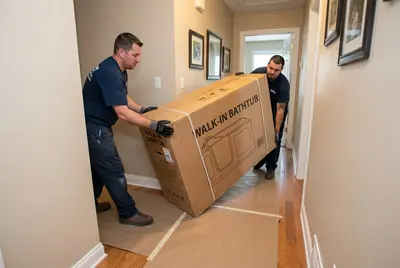
  • The new tub arrives whole

    Walk-in tubs are built to travel through ordinary doorways. Every door on the route gets measured at the assessment, so delivery day holds no surprises.

    The new tub arrives whole
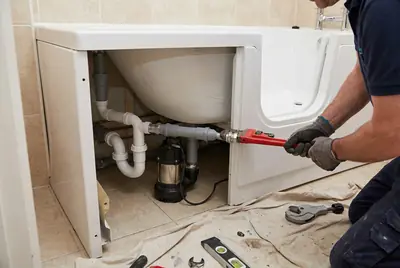
  • Water lines and the fast drain

    Your supply lines usually stay where they are. We fit the new valve, the hand shower and the quick drain, and check that your water heater can fill a proper soak.

    Water lines and the fast drain
  • The door, hung and sealed

    The door is the heart of the tub, so it gets the slow, careful hour: aligned, adjusted and closed on its seal until the gap reads even all the way around.

    The door, hung and sealed
  • Jets, warm air and controls

    When your tub has hydrotherapy, the pumps go in quiet, the lines are purged, and every control lands where a seated bather reaches it without leaning.

    Jets, warm air and controls
  • Walls, trim and the brimful test

    Panels and trim close the sides and the caulk lines are drawn clean. Then the tub is filled to the very brim once, and we watch the seal earn its keep.

    Walls, trim and the brimful test

Where the money for this actually comes from

We would rather tell you this before you fall in love with a tub. A walk-in tub is a home improvement, not medical equipment, and it is paid for out of the household budget the way a new roof or a rebuilt porch is. Anyone who tells you otherwise on a first phone call is selling harder than they are listening.

We make no claim about what any plan, programme or agency might do on your behalf, and we will not guess for them. Those questions belong to the people who administer them, and their answer is the only one that counts. Ask them directly, and ask before you commit to anything, including anything of ours.

What we can do is make the asking easy. Your quote arrives itemized, every line explained, so whoever needs to see it gets a precise document instead of a vague promise. That is the whole of what we control, and we would rather hand you that than a hopeful sentence about somebody else's money.

How it goes, from hello to first bath in West Line

  1. The call

    You tell us who bathes and how they get around, the rough size of the bathroom and how the tub would travel in. A few minutes on the phone, and a date for the visit.

  2. The visit

    We come to your home, measure the bathroom and every doorway on the route, and listen. No van full of tubs at the curb, no clipboard theatrics, no hurry.

  3. On paper

    A written quote follows, with each line explained in plain words: the tub, the work, the removal of the old one. Show it to your family. Sleep on it as long as you like.

  4. Fitting days

    One crew, one to three days. The old tub out, the new one plumbed, sealed and tested full. Your water is off for hours at a stretch, never for days.

  5. The first bath

    Before we leave, we go through the door, the seat, the drain and the controls with the person who will actually bathe, until every part of it feels ordinary.

What the work costs, in plain figures in West Line

The projectUsual bracketWhat sits inside it
Walk-in soaker tub, installed$4,000 - $8,000The tub, the door, removal of the old bathtub and the full fitting.
Hydrotherapy tub with jets$6,000 - $12,000Water jets, warm air or both, with the pumps and controls they need.
Bariatric or wide-door tub$7,000 - $14,000Wider seats and doors on a reinforced frame, sized at the assessment.
Removing the old bathtub alone$450 - $1,200Folded into the lines above; priced apart only if you stop there.
Dedicated electrical circuit$400 - $1,000Heated seats and pumps want their own breaker when the panel has no spare.
Walk-in tub and shower combo$8,000 - $15,000One unit that soaks and showers, for households that want both.

Your bathroom, your plumbing and the tub you choose set the final figure. That is exactly what the assessment is for.

Safety features that matter

The featureWhat it isWhy it counts
Low thresholdA step of about four inches into the tubThe climb over a bathtub wall is where most bathroom falls begin. Removing the climb removes the moment.
Seat at chair heightA molded seat near seventeen inches, like a dining chairSitting down and standing back up stay easy on knees and hips, with no lowering to the floor of a tub.
Grab bars where hands landFixed bars at the door and beside the seatBalance never has to depend on a towel bar that was only ever meant to hold towels.
Textured floor and seatSlip resistance molded into the tub surface itselfWet feet keep their grip without rubber mats that curl, slide and grow things.
Anti-scald valveA mixing valve that caps how hot water can arriveSkin grows thinner with the years. The valve keeps a hot surprise from ever reaching it.

Questions we answer at kitchen tables

Does the water rise quickly once I am seated?

You do sit in the tub while it fills, so the wait is real: usually a few minutes, depending on your water pressure and your heater. Many bathers spend it with the warm air running or the hand shower on their shoulders. At the assessment we run your own faucet and give you an honest minute count for your own bathroom, not a brochure number.

Will I sit in the cold while it drains?

The door only opens once the water is gone, so the drain matters. Fast drain systems empty most tubs in about two minutes, and heated seats and warm air keep the chill away while they do. We will tell you plainly which tubs drain fastest on your plumbing around West Line.

What happens if the door leaks?

The door seals the way a ship's hatch does: the water itself presses it shut, so a good seal gets tighter as the tub fills. Every tub we fit is filled to the brim and watched before we call the job finished, and the seal carries the maker's warranty. If it ever weeps, we come back, and the trip costs you nothing.

Will the tub fit through my bathroom door?

Nearly always, because walk-in tubs are designed to travel through ordinary hallways and door frames. We measure the whole route at the assessment, front porch to bathroom. If a doorway is genuinely too narrow, you hear it from us at your kitchen table, never on delivery day.

Can I arrange this for my mother or my father?

Yes, and it happens all the time. We can hold the assessment while you are there in person, on the phone or on a video call, and the written quote goes to whoever is helping with the decision. The walkthrough at the end is always done with the person who will actually bathe.

Does asking for a quote tie me to anything?

No. We measure, we listen, we leave a written price, and your house is your own again. Some families decide that week and some take a season. The figure holds as written, and nobody from our side will camp on your phone line.

The streets we drive around West Line

Pan around for the terrain and the distances; the place lists at the bottom of this page name each community we can drive to from here.

Around town: West Line

Standing
Incorporated place
Population
107 people call it home
Land area
0.5 square miles
Density
236 neighbors per square mile
Median household income
$53,929
Census region
Midwest
Country
United States

Front doors we knock on near West Line

Missouri, one safe bath at a time

One sealed door between you and the bath you have been missing.

Call (844) 578-1861