Walk-In Tub Installation

Walk-In Tub Installation in Illinois (IL)

Crews across Illinois fit walk-in tubs with sealed doors and low thresholds, old bathtub out and new one tested full, priced on one sheet of paper.

Book my free home assessment

A calm visit, a written quote, and all the time you need to decide.

Counties we reach
102
Region
Midwest
Biggest city
Chicago

Transforming Your Daily Bathroom Routine Safely Across Illinois

Are you tired of struggling with a high bathtub wall every single morning? Well, replacing your old setup with a secure soaking basin gives you total peace of mind. Therefore, let us explore why upgrading your bathing space changes everything for your household.

Many homeowners struggle with mobility issues as the years pass by. Because of this, stepping over a traditional ceramic lip becomes a daily hazard. This lets you avoid nasty slips and dangerous falls right inside your own home.

Choosing the right contractor in the Midwest matters immensely for your peace of mind. Fortunately, local pros handle this specific home upgrade every single week. This means your project finishes quickly without any unnecessary stress.

Understanding the Safe Bathing Upgrade

What exactly happens during a bathroom transformation project of this magnitude? Basically, technicians remove your old tub and modify the plumbing connections to fit a brand new therapeutic soaking unit. Consequently, you gain an accessible bathing spot equipped with a watertight swinging portal.

During the process, skilled workers ensure that everything fits snugly against your existing tile walls. Furthermore, they install built-in grab bars and slip-resistant flooring surfaces for maximum security. This translates to a much safer environment for anyone who struggles with balance.

Key Features of Accessible Soaking Basins

Low thresholds make entering the water effortless for individuals with limited mobility. Additionally, therapeutic hydrotherapy jets soothe aching joints and sore muscles after a long day at work. This gives you a spa-like retreat right in your primary bathroom.

Quick-drain technology prevents you from sitting around and shivering while waiting for the water level to drop. On top of that, built-in contoured seating ensures maximum luxury while you relax and unwind. This lets you enjoy your daily hygiene routine without any physical strain.

Evaluating the Real Costs and Practical Benefits

Money talks when you plan a major home renovation project. Yet, investing in accessibility features actually adds substantial value to your property over time. This makes the upfront price tag much easier to swallow for budget-conscious families.

Insurance companies sometimes cover a portion of these specialized plumbing modifications. However, you should always check your specific policy details before signing any contracts. This guarantees you do not miss out on potential financial assistance.

Comparing Traditional Tubs Versus Modern Accessible Units

Feature Standard Tub Modern Accessible Unit
Entry Method High step-over wall Low-threshold side door
Safety Risks High slip hazard Grab bars and non-skid floors
Hydrotherapy Rarely included Built-in jets for relaxation

Traditional porcelain tubs pose a constant danger to older adults living independently. In contrast, modern step-in basins eliminate awkward lifting motions completely. This lets you maintain your personal hygiene without asking family members for constant physical assistance.

Long-Term Value for Your Property

Future buyers often look for houses equipped with aging-in-place modifications already installed. Consequently, your investment pays off handsomely if you decide to sell your residence down the road. This ensures your home stands out in a competitive real estate market.

Energy efficiency also plays a role because modern acrylic materials retain water heat much longer. As a result, your hot water heater does not have to work nearly as hard. This translates to lower utility bills month after month.

Navigating the Installation Process With Confidence

Planning the actual construction phase requires working with experienced local craftspeople. Fortunately, qualified technicians complete most retrofits in just a single day. This means your daily routine experiences minimal disruption.

First, inspectors measure your space to ensure the new unit fits your exact layout. Then, demolition begins by removing the dated porcelain fixture carefully. This lets installers check for hidden water damage behind your drywall.

What to Expect on Construction Day

Workers arrive early with all the necessary tools and replacement plumbing parts. Subsequently, they protect your hallway floors using heavy-duty drop cloths before starting any messy work. This keeps your living areas clean throughout the entire duration of the project.

Plumbing lines get adjusted to match the new drain and faucet configurations precisely. Following that, electricians wire the hydrotherapy pumps safely into your breaker box. This guarantees all safety codes get met without any shortcuts.

Post-Installation Testing and Quality Control

Every single seal undergoes rigorous pressure testing before technicians pack up their gear. Additionally, they fill the basin completely to verify that the side-entry seal holds water without leaking. This lets you use your new fixture immediately with total confidence.

Cleanup happens rapidly so you can admire your upgraded bathroom right away. On top of that, professionals walk you through the operating instructions for all the various jets and drains. This ensures you master your new setup on the very first try.

Selecting the Ideal Contractor for Your Project

Finding a trustworthy trade professional in your local area takes a little bit of research. Therefore, always check references and read genuine customer reviews before making your final hiring decision. This protects you from dishonest operators who promise the world but deliver poor craftsmanship.

Warranties offer another crucial layer of protection for your financial investment. Fortunately, reputable providers stand behind their labor and materials with comprehensive coverage. This means any unexpected issues get resolved quickly at no extra cost to you.

Questions to Ask Potential Service Providers

How many years of experience do your installers possess in this specific trade? Asking this helps you gauge their actual competency level right from the start. This ensures your bathroom modifications get handled by true professionals.

Are your workers fully licensed and insured for residential plumbing modifications? Confirming this detail shields you from liability if an accident happens on your property. This gives you complete peace of mind while work is underway.

Red Flags to Avoid During Your Search

Steer clear of contractors who demand full payment before any materials arrive at your house. Reputable businesses always request a reasonable deposit and collect the balance only upon completion. This keeps you in control of your hard-earned money.

High-pressure sales tactics usually indicate a company cares more about quotas than customer satisfaction. Instead, look for patient professionals who listen to your concerns and answer questions honestly. This guarantees a smooth working relationship from start to finish.

Making the Final Decision to Upgrade

Deciding to modernize your washing facilities is a major step toward independent living. Because physical safety cannot be compromised, taking action today prevents painful accidents tomorrow. This lets you enjoy your golden years right where you belong.

Every day you wait is another day dealing with unnecessary anxiety during bath time. Fortunately, taking the next step requires nothing more than a quick conversation with a local professional. This means relief is closer than you might initially think.

Your Next Steps Toward a Safer Home

Gathering accurate pricing information helps you budget for your upcoming home improvement project properly. Therefore, you should request a completely complimentary consultation from a trusted local contractor today. This lets you explore all available options without spending a single penny upfront.

Qualified specialists visit your home, measure the space, and provide a detailed estimate tailored to your needs. Consequently, you receive transparent pricing with zero hidden fees attached to the final bill. This makes planning your bathroom renovation simple and straightforward.

Do not let bathroom safety hazards threaten your independence any longer. Reach out right now to schedule your free estimate and take the first step toward a secure, relaxing bathing experience.

The door, the seal, the drain: how a walk-in tub works

Three ideas carry the whole invention. Once they make sense, the rest of this page is just detail.

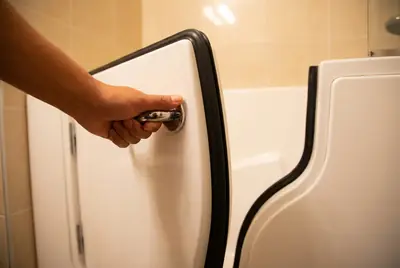
The inward opening door of a walk-in tub

A door that opens inward

You open the door, walk in on a dry floor, sit down and close it. Only then does the water run. Because the door swings into the tub, the water itself presses it against its seal: the fuller the tub, the tighter it holds. The design cannot forget to be shut properly.

A threshold about four inches high

An ordinary bathtub asks you to swing a leg over a wall some fifteen inches tall, on wet tile, usually while holding nothing sturdier than a towel bar. A walk-in tub asks for a small step, about the height of a stair riser cut in half, with a grab bar placed exactly where your hand goes looking for one.

Hydrotherapy jets working inside a filled walk-in tub

A drain built to hurry

The honest cost of the sealed door is that you sit while the tub fills and while it empties. Makers answer with fast drains, often two of them, that send the water away in a couple of minutes, and with heated seats and warm air so those minutes pass kindly. We time both on your own plumbing at the assessment.

Tub or walk-in shower? A fair answer

We install walk-in tubs, so you might expect us to always recommend one. We will not. If you have not enjoyed a bath in twenty years, a walk-in shower may serve you better, and we will say so at your own sink. Here is the honest picture.

The questionWalk-in tubWalk-in shower
What bathing feels likeA full warm soak, jets if you want themA quick rinse, standing or on a bench
Time it asks of youLonger: fill, soak, drainMinutes, in and out
Floor space neededSits in the footprint of the old bathtubWants a little more open floor to work well
Budget, installedHigher, because the door and seal are precision workOften lower for a simple conversion
Sore joints and tired musclesWarm water and jets do real, daily good hereNo soak, so none of the soak's relief
Who tends to love itPeople who cherish their bath and mean to keep itPeople who shower quickly and want easy cleaning

The deciding question is usually the first row. If the answer to "do you miss your bath" is yes, the rest of the table tends to follow.

Six pieces of work, one quiet bathroom

  • The old tub leaves first

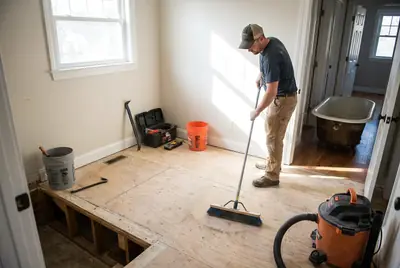
    We cut it free, shield the floors along the hallway and carry it out gently. Most old bathtubs are gone from the house before lunch.

    The old tub leaves first
  • The new tub arrives whole

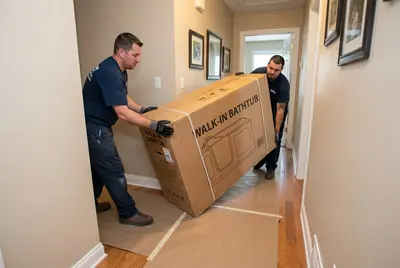
    Walk-in tubs are built to travel through ordinary doorways. Every door on the route gets measured at the assessment, so delivery day holds no surprises.

    The new tub arrives whole
  • Water lines and the fast drain

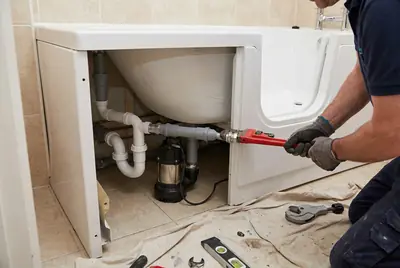
    Your supply lines usually stay where they are. We fit the new valve, the hand shower and the quick drain, and check that your water heater can fill a proper soak.

    Water lines and the fast drain
  • The door, hung and sealed

    The door is the heart of the tub, so it gets the slow, careful hour: aligned, adjusted and closed on its seal until the gap reads even all the way around.

    The door, hung and sealed
  • Jets, warm air and controls

    When your tub has hydrotherapy, the pumps go in quiet, the lines are purged, and every control lands where a seated bather reaches it without leaning.

    Jets, warm air and controls
  • Walls, trim and the brimful test

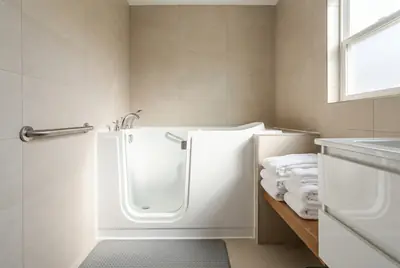
    Panels and trim close the sides and the caulk lines are drawn clean. Then the tub is filled to the very brim once, and we watch the seal earn its keep.

    Walls, trim and the brimful test

What insurance honestly covers

We would rather tell you this before you fall in love with a tub. Original Medicare treats a walk-in tub as a home improvement rather than as medical equipment, so in most cases it does not pay for one. Anyone who tells you otherwise on a first phone call is selling harder than they are listening.

That said, not every door is closed. Some Medicare Advantage plans include allowances for safety changes to the home. Some states run Medicaid waivers that can help with bathing equipment when it keeps a person living in their own house. Veterans and their families may find support through home adaptation programs. Every one of these depends on your plan, your state and your circumstances, and none of them is a promise we are able to make on their behalf.

What we can do is make the asking easy. Your quote arrives itemized, every line explained, so you can hand it to your plan, your caseworker or your benefits office and ask a precise question instead of a hopeful one. Call your plan before you sign anything, including anything of ours. We put that sentence in writing because we mean it.

How it goes, from hello to first bath

  1. The visit

    We come to your home, measure the bathroom and every doorway on the route, and listen to who bathes and how. No van full of tubs at the curb, no clipboard theatrics, no hurry.

  2. On paper

    A written quote follows, with each line explained in plain words: the tub, the work, the removal of the old one. Show it to your family. Sleep on it as long as you like.

  3. Fitting days

    One crew, one to three days. The old tub out, the new one plumbed, sealed and tested full. Your water is off for hours at a stretch, never for days.

  4. The first bath

    Before we leave, we go through the door, the seat, the drain and the controls with the person who will actually bathe, until every part of it feels ordinary.

What the work costs, in plain figures

The projectUsual bracketWhat sits inside it
Walk-in soaker tub, installed$4,000 - $8,000The tub, the door, removal of the old bathtub and the full fitting.
Hydrotherapy tub with jets$6,000 - $12,000Water jets, warm air or both, with the pumps and controls they need.
Bariatric or wide-door tub$7,000 - $14,000Wider seats and doors on a reinforced frame, sized at the assessment.
Removing the old bathtub alone$450 - $1,200Folded into the lines above; priced apart only if you stop there.
Dedicated electrical circuit$400 - $1,000Heated seats and pumps want their own breaker when the panel has no spare.
Walk-in tub and shower combo$8,000 - $15,000One unit that soaks and showers, for households that want both.

Your bathroom, your plumbing and the tub you choose set the final figure. That is exactly what the assessment is for, and the assessment is free.

Safety features that matter

The featureWhat it isWhy it counts
Low thresholdA step of about four inches into the tubThe climb over a bathtub wall is where most bathroom falls begin. Removing the climb removes the moment.
Seat at chair heightA molded seat near seventeen inches, like a dining chairSitting down and standing back up stay easy on knees and hips, with no lowering to the floor of a tub.
Grab bars where hands landFixed bars at the door and beside the seatBalance never has to depend on a towel bar that was only ever meant to hold towels.
Textured floor and seatSlip resistance molded into the tub surface itselfWet feet keep their grip without rubber mats that curl, slide and grow things.
Anti-scald valveA mixing valve that caps how hot water can arriveSkin grows thinner with the years. The valve keeps a hot surprise from ever reaching it.

Questions we answer at kitchen tables

Does the water rise quickly once I am seated?

You do sit in the tub while it fills, so the wait is real: usually a few minutes, depending on your water pressure and your heater. Many bathers spend it with the warm air running or the hand shower on their shoulders. At the assessment we run your own faucet and give you an honest minute count for your own bathroom, not a brochure number.

Will I sit in the cold while it drains?

The door only opens once the water is gone, so the drain matters. Fast drain systems empty most tubs in about two minutes, and heated seats and warm air keep the chill away while they do. We will tell you plainly which tubs drain fastest on your plumbing.

What happens if the door leaks?

The door seals the way a ship's hatch does: the water itself presses it shut, so a good seal gets tighter as the tub fills. Every tub we fit is filled to the brim and watched before we call the job finished, and the seal carries the maker's warranty. If it ever weeps, we come back, and the trip costs you nothing.

Will the tub fit through my bathroom door?

Nearly always, because walk-in tubs are designed to travel through ordinary hallways and door frames. We measure the whole route at the assessment, front porch to bathroom. If a doorway is genuinely too narrow, you hear it from us at your kitchen table, never on delivery day.

Can I arrange this for my mother or my father?

Yes, and it happens all the time. We can hold the assessment while you are there in person, on the phone or on a video call, and the written quote goes to whoever is helping with the decision. The walkthrough at the end is always done with the person who will actually bathe.

Is the quote truly free, no strings?

Truly. We measure, we listen, we leave a written price, and your house is your own again. Some families decide that week and some take a season. The figure holds as written, and nobody from our side will camp on your phone line.

The streets we drive around Illinois

Pan around for the terrain and the distances; the place lists at the bottom of this page name each community we can drive to from here.

Every county of Illinois, tub by tub

Warm water waiting in the cities of Illinois

More gentle waters of the Midwest

One sealed door between you and the bath you have been missing.

Book my free home assessment