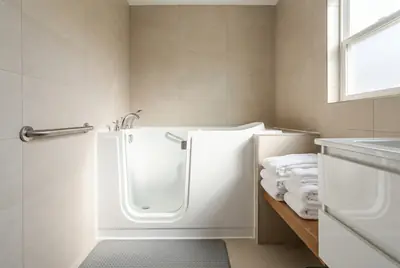
Walk-In Tub Installation

Walk-In Tub Installation in Fairfax County, Virginia (VA)

From every corner of Fairfax County, the climb over the tub wall gives way to a watertight door, a warm seat and a steady hand to hold.

One number reaches the people who fit the tubs. Say what the bathroom is like and we take it from there.

(844) 578-1861
  • The crew that covers your area takes the call
  • A home assessment and a written quote, both set up on the call
  • Nothing is decided until you decide it

Take your time on the phone. Who does the bathing, how they get around today, the size of the bathroom and the doorways on the way in: that is all we need to set a date for the visit.

An easy-entry soaking basin with a sealed door can totally change how you feel about bathing in your own home. Naturally, having a safe and soothing way to clean yourself brings total peace of mind every single day. If you want to upgrade your bathroom safely, you can grab a free estimate today from a friendly local contractor who knows the business inside out.

Why upgrading your deep soaking bath with a side door is smart

Actually, staying safe in the bathroom is a huge deal for thousands of folks living around northern Virginia near Washington. As people get older or deal with bad knees, climbing over a high porcelain wall gets pretty scary fast. Honestly, nobody wants to slip on wet tiles while trying to enjoy a warm wash... it is just not worth the risk. By putting in a custom step-in bathing unit with a leak-proof gate, you turn a risky chore into a relaxing treat.

Besides, the cozy feeling of sitting down in a warm tub without stress is tough to beat. Plus, these cozy setups come loaded with sweet options like heated seats and hydrotherapy jets that massage your aching back. Therefore, getting rid of your old slippery basin gives you back your independence. Honestly, my own uncle had one put in last year, and he swears it saved his hips from completely giving out!

Understanding how these accessible deep basins actually work

Basically, these clever fixtures rely on heavy-duty silicone gaskets to keep all the water inside where it belongs. When you step inside, you close the lightweight latch, lock it tight, and then hit the warm water taps. Honestly, you just sit back on the built-in chair height bench while the deep tank fills up all around you. After you finish washing, a fast-draining mechanism pulls all the water out quick so you can open up and walk right out.

Normally, the whole process takes just a few minutes once the plumbing is set up right by a trained local hand. In addition, you get tall grab bars mounted right on the walls to help you stand up smoothly without straining. Consequently, you never have to stretch or twist your body in awkward ways just to stay clean. Honestly, it feels way more like a luxury spa than an ordinary washroom upgrade.

What goes into a proper tall seated wash tank fitting

Truthfully, taking out an old cast-iron basin and installing a sealed step-in setup requires some real muscle and know-how. First, the old standard tub has to be chopped up and pulled out of the wall frame carefully. Next, a plumber checks your water lines and expands the drain size so the water empties fast later on. Furthermore, an electrician often needs to run a dedicated line to feed those relaxing air jets and internal heaters.

To help you get a real clear picture of what goes down during a job like this, here is a breakdown of the standard setup steps.

Project Phase What Happens Main Reader Benefit
Preparation Removing old fixtures and checking subfloors Prevents hidden water damage and rotted wood
Plumbing Upgrade Installing fast drains and heavy supply lines Fills fast and drains out quickly so you do not sit cold
Electrical Work Connecting dedicated power lines for pumps Ensures total electrical safety while jets run
Final Sealing Locking down silicone caulk and wall surrounds Keeps your floor dry and protects house foundations

After the main tank gets leveled, colorful acrylic surround panels get glued up to protect your drywall from moisture. Afterwards, custom handrails, flex hoses, and quick-turn faucets get bolted down tight to complete the package. Clearly, having a professional handle these tricky heavy steps means you will not end up with messy leaks in your basement down the road.

Choosing the right features for your specific bathing needs

Surprisingly, these tall low-step soaking units come in a ton of different shapes and sizes to fit standard alcoves. On one hand, you can grab a basic layout that just focuses on simple low-threshold entry and safe handholds. On the other hand, you can go all out with colorful chromatherapy lights, warm air jets, and micro-bubble skin openers. Honestly, picking out the cool gadgets is definitely the fun part of the entire project!

To help you figure out what matters most, here is a quick look at the top features folks usually pick out.

  • Low step-in thresholds that sit just a few inches off the floor to prevent nasty tripping.
  • Textured anti-slip flooring materials that grip your feet even when covered in slippery body soap.
  • Internal heating pads that keep the water hot so you do not have to keep refilling the tank.
  • Fast dual-drain technology that dumps all the dirty water out in under two minutes total.
  • Retractable hand-held shower wands that let you wash your hair easily without spraying the walls.

In short, matching these options to your daily routine makes bath time feel awesome instead of scary.

Cost factors and local considerations in the area

Logically, setting up an accessible bathing area costs different amounts depending on how fancy your house is built. For example, houses in high-earning spots like those with median income numbers around $147,000 often have larger bathrooms that need custom drywall work. Meanwhile, older ranch homes down ZIP codes like 22030 or 22150 might need electrical panel upgrades to handle high-powered jet pumps. Naturally, an installer who knows local building codes in this major region of over 1.1 million residents will handle permits without any headaches.

Also, the overall price tag shifts based on whether you want a basic fiberglass shell or a sleek high-gloss acrylic finish. Although acrylic costs a bit more upfront, it resists mold and yellow stains way better over time. Plus, acrylic keeps the water hot longer because it acts like an insulated cooler wall! Therefore, spending a few extra bucks on quality materials saves you money on your hot water bill later down the line.

Why working with a local professional is the way to go

Obviously, trying to tackle a massive plumbing job like this by yourself over the weekend is a recipe for disaster. Heavy water tanks can weigh hundreds of pounds, and one loose pipe fitting can rot out your ceiling joists in a hurry. However, hiring a licensed contractor who specializes in easy-entry bathing conversions gives you total confidence that everything is done right. Plus, they bring all the specialized tools, extra hands, and insurance stuff so you do not have to worry about a thing.

To be honest, local workers care more about their reputation because they live right down the street from where you shop. When you request a completely free estimate, a technician comes out to measure your space and check your pipes without pushing high-pressure sales talk. Furthermore, they can give you direct answers about how long the job will take and what permits are required by regional inspectors. Consequently, you get a straight answer on pricing with zero sneaky surprise fees tacked on later.

Transforming your daily routine with total peace of mind

Honestly, taking control of your personal hygiene and staying independent in your home feels totally liberating. Instead of stressing about slipping on wet enamel, you simply swing the side door open, step inside easily, and relax in warm water. Furthermore, your family members will stop worrying about you getting hurt when you are alone in the washroom. Really, putting in a modern accessible hydrotherapy basin is one of the best investments you can make for your home and health.

Now is the absolute best time to take action and make your bathroom safe and enjoyable once again. Simply get in touch with an experienced local contractor to set up your free written estimate today. They will evaluate your space, listen to what you want, and show you exactly how easy this project can be. Do not wait for a bad fall to happen... upgrade your home today and enjoy safe, warm baths whenever you want!

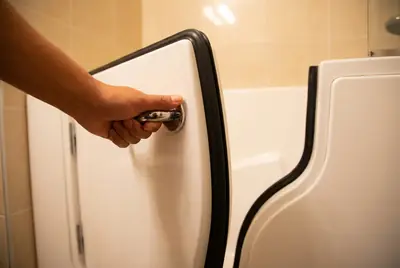
The door, the seal, the drain: how a walk-in tub works

Three ideas carry the whole invention. Once they make sense, the rest of this page is just detail.

The inward opening door of a walk-in tub

A door that opens inward

You open the door, walk in on a dry floor, sit down and close it. Only then does the water run. Because the door swings into the tub, the water itself presses it against its seal: the fuller the tub, the tighter it holds. The design cannot forget to be shut properly.

A threshold about four inches high

An ordinary bathtub asks you to swing a leg over a wall some fifteen inches tall, on wet tile, usually while holding nothing sturdier than a towel bar. A walk-in tub asks for a small step, about the height of a stair riser cut in half, with a grab bar placed exactly where your hand goes looking for one.

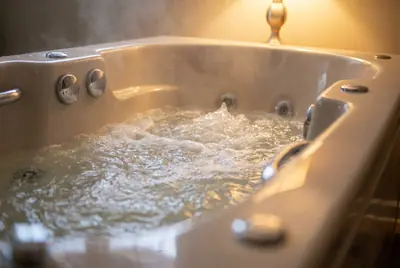
Hydrotherapy jets working inside a filled walk-in tub

A drain built to hurry

The honest cost of the sealed door is that you sit while the tub fills and while it empties. Makers answer with fast drains, often two of them, that send the water away in a couple of minutes, and with heated seats and warm air so those minutes pass kindly. We time both on your own plumbing at the assessment.

Tub or walk-in shower? A fair answer

We install walk-in tubs, so you might expect us to always recommend one. We will not. If you have not enjoyed a bath in twenty years, a walk-in shower may serve you better, and we will say so at your own sink. Here is the honest picture.

The questionWalk-in tubWalk-in shower
What bathing feels likeA full warm soak, jets if you want themA quick rinse, standing or on a bench
Time it asks of youLonger: fill, soak, drainMinutes, in and out
Floor space neededSits in the footprint of the old bathtubWants a little more open floor to work well
Budget, installedHigher, because the door and seal are precision workOften lower for a simple conversion
Sore joints and tired musclesWarm water and jets do real, daily good hereNo soak, so none of the soak's relief
Who tends to love itPeople who cherish their bath and mean to keep itPeople who shower quickly and want easy cleaning

The deciding question is usually the first row. If the answer to "do you miss your bath" is yes, the rest of the table tends to follow.

Six pieces of work, one quiet bathroom

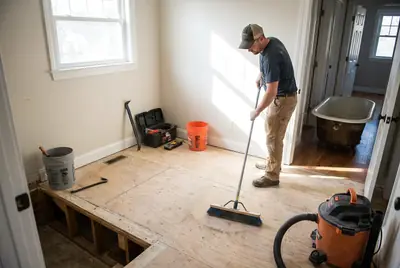
  • The old tub leaves first

    We cut it free, shield the floors along the hallway and carry it out gently. Most old bathtubs are gone from the house before lunch.

    The old tub leaves first
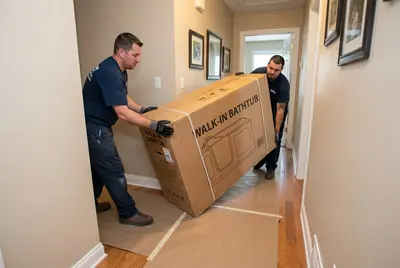
  • The new tub arrives whole

    Walk-in tubs are built to travel through ordinary doorways. Every door on the route gets measured at the assessment, so delivery day holds no surprises.

    The new tub arrives whole
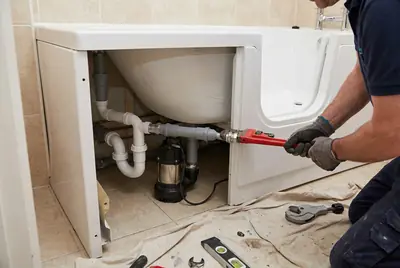
  • Water lines and the fast drain

    Your supply lines usually stay where they are. We fit the new valve, the hand shower and the quick drain, and check that your water heater can fill a proper soak.

    Water lines and the fast drain
  • The door, hung and sealed

    The door is the heart of the tub, so it gets the slow, careful hour: aligned, adjusted and closed on its seal until the gap reads even all the way around.

    The door, hung and sealed
  • Jets, warm air and controls

    When your tub has hydrotherapy, the pumps go in quiet, the lines are purged, and every control lands where a seated bather reaches it without leaning.

    Jets, warm air and controls
  • Walls, trim and the brimful test

    Panels and trim close the sides and the caulk lines are drawn clean. Then the tub is filled to the very brim once, and we watch the seal earn its keep.

    Walls, trim and the brimful test

Where the money for this actually comes from

We would rather tell you this before you fall in love with a tub. A walk-in tub is a home improvement, not medical equipment, and it is paid for out of the household budget the way a new roof or a rebuilt porch is. Anyone who tells you otherwise on a first phone call is selling harder than they are listening.

We make no claim about what any plan, programme or agency might do on your behalf, and we will not guess for them. Those questions belong to the people who administer them, and their answer is the only one that counts. Ask them directly, and ask before you commit to anything, including anything of ours.

What we can do is make the asking easy. Your quote arrives itemized, every line explained, so whoever needs to see it gets a precise document instead of a vague promise. That is the whole of what we control, and we would rather hand you that than a hopeful sentence about somebody else's money.

How it goes, from hello to first bath

  1. The call

    You tell us who bathes and how they get around, the rough size of the bathroom and how the tub would travel in. A few minutes on the phone, and a date for the visit.

  2. The visit

    We come to your home, measure the bathroom and every doorway on the route, and listen. No van full of tubs at the curb, no clipboard theatrics, no hurry.

  3. On paper

    A written quote follows, with each line explained in plain words: the tub, the work, the removal of the old one. Show it to your family. Sleep on it as long as you like.

  4. Fitting days

    One crew, one to three days. The old tub out, the new one plumbed, sealed and tested full. Your water is off for hours at a stretch, never for days.

  5. The first bath

    Before we leave, we go through the door, the seat, the drain and the controls with the person who will actually bathe, until every part of it feels ordinary.

What the work costs, in plain figures

The projectUsual bracketWhat sits inside it
Walk-in soaker tub, installed$4,000 - $8,000The tub, the door, removal of the old bathtub and the full fitting.
Hydrotherapy tub with jets$6,000 - $12,000Water jets, warm air or both, with the pumps and controls they need.
Bariatric or wide-door tub$7,000 - $14,000Wider seats and doors on a reinforced frame, sized at the assessment.
Removing the old bathtub alone$450 - $1,200Folded into the lines above; priced apart only if you stop there.
Dedicated electrical circuit$400 - $1,000Heated seats and pumps want their own breaker when the panel has no spare.
Walk-in tub and shower combo$8,000 - $15,000One unit that soaks and showers, for households that want both.

Your bathroom, your plumbing and the tub you choose set the final figure. That is exactly what the assessment is for.

Safety features that matter

The featureWhat it isWhy it counts
Low thresholdA step of about four inches into the tubThe climb over a bathtub wall is where most bathroom falls begin. Removing the climb removes the moment.
Seat at chair heightA molded seat near seventeen inches, like a dining chairSitting down and standing back up stay easy on knees and hips, with no lowering to the floor of a tub.
Grab bars where hands landFixed bars at the door and beside the seatBalance never has to depend on a towel bar that was only ever meant to hold towels.
Textured floor and seatSlip resistance molded into the tub surface itselfWet feet keep their grip without rubber mats that curl, slide and grow things.
Anti-scald valveA mixing valve that caps how hot water can arriveSkin grows thinner with the years. The valve keeps a hot surprise from ever reaching it.

Questions we answer at kitchen tables

Does the water rise quickly once I am seated?

You do sit in the tub while it fills, so the wait is real: usually a few minutes, depending on your water pressure and your heater. Many bathers spend it with the warm air running or the hand shower on their shoulders. At the assessment we run your own faucet and give you an honest minute count for your own bathroom, not a brochure number.

Will I sit in the cold while it drains?

The door only opens once the water is gone, so the drain matters. Fast drain systems empty most tubs in about two minutes, and heated seats and warm air keep the chill away while they do. We will tell you plainly which tubs drain fastest on your plumbing.

What happens if the door leaks?

The door seals the way a ship's hatch does: the water itself presses it shut, so a good seal gets tighter as the tub fills. Every tub we fit is filled to the brim and watched before we call the job finished, and the seal carries the maker's warranty. If it ever weeps, we come back, and the trip costs you nothing.

Will the tub fit through my bathroom door?

Nearly always, because walk-in tubs are designed to travel through ordinary hallways and door frames. We measure the whole route at the assessment, front porch to bathroom. If a doorway is genuinely too narrow, you hear it from us at your kitchen table, never on delivery day.

Can I arrange this for my mother or my father?

Yes, and it happens all the time. We can hold the assessment while you are there in person, on the phone or on a video call, and the written quote goes to whoever is helping with the decision. The walkthrough at the end is always done with the person who will actually bathe.

Does asking for a quote tie me to anything?

No. We measure, we listen, we leave a written price, and your house is your own again. Some families decide that week and some take a season. The figure holds as written, and nobody from our side will camp on your phone line.

The streets we drive around Fairfax County

Pan around for the terrain and the distances; the place lists at the bottom of this page name each community we can drive to from here.

Households we help across Fairfax County

County roads onward through Virginia

One sealed door between you and the bath you have been missing.

Call (844) 578-1861